Substack and Intentional Consumption
Newsletters are for old people, right? It was the purgatory between newspapers and Twitter feeds. The way for missionary students to keep up with their donors and the occasional coupon-book disguised as a business update. Who knew that they would be one of my favorite sources of information in our algorithmic age.
Substack’s whole premise is simple: writers publish, readers subscribe, and the content shows up in your inbox. It completely forgoes recommendation systems or engagement filters. The company’s rise makes sense. By 2025, Substack had millions of paid subscriptions and secured major investor backing, proving that people are willing to pay for writing they intentionally choose to read (Axios, 2025). Writers get independence; readers get control. Free speech for everyone, without having to code your own program. Well, sorta. Substack has its controversies, especially around content moderation and political extremism (Contrary Research, 2025). (They had a major neo-nazi problem that is still around but now found mostly on Twitter/X.) But still, writers prevail and Stubstack continues to grow as service. Compared to the usual social apps, receiving a newsletter in your inbox feels calmer, slower, and more human. And "more-human" is great market to get into at the moment.
Speaking from a readers perspective, newsletters hit different. Newsletters have this built-in friction that algorithmic feeds don’t. You have to decide to open them. You have to make time. You have to care. It’s a shift from passive consumption to active curation. A lot of people my age are hungry for that, something deeper than whatever TikTok decides has a 0.4-second retention boost. On Substack, you follow thinkers and voices, not trends. It feels like a conversation rather than a broadcast.
Substack and the continued movement of the Indie Web once again is putting users back in the driver seat. RSS gives you full control: you choose the sites, and you see everything they post, with zero algorithmic reshuffling. It’s old-school, but in the best way. These creators build their own corners of the internet rather than letting platforms define everything. It’s all about intentional pathways instead of optimized funnels. What newsletters, RSS, and the Indie Web share is a belief in user agency. You shape your own media environment, not the other way around.
Substack isn’t flawless, but it taps into a real shift: people want an internet that feels personal again. Not “personalized”, but personal. My favorite newsletter that I subscribe to is "I <3 Mess", its a weekly breakdown of the worst of celebrity fashion by fashion writer Emily Kirkpatrick. Every week, usually when I have a few moments between lecture, I get to look at the insane things the Kardashians wear and why they wear them. Kirkpatrick draws connections from runways, history, and politics as readers gawk at whatever Julia Fox is wearing this week. I get these insights without having to scroll for her latest thoughts or be assaulted by at. It's simply in my inbox next to my NPR news.
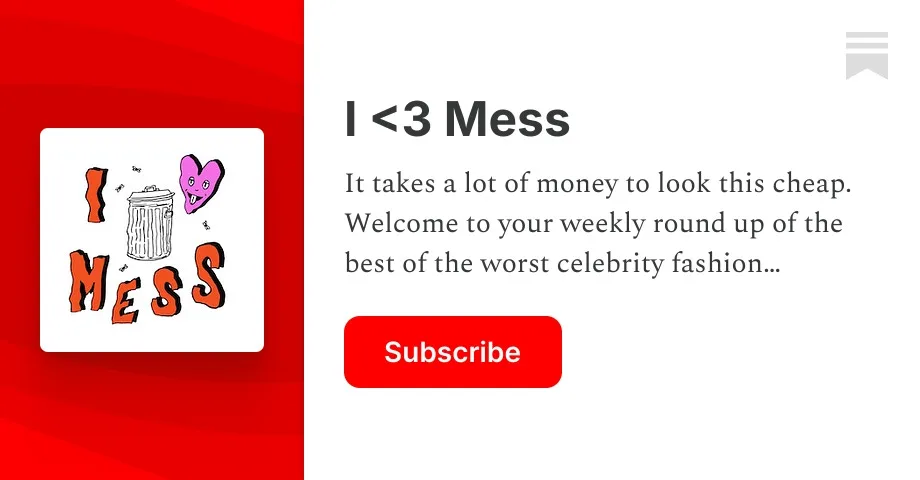
I don't think the future is newsletters, it seems like a clunky alternative too our current system. Stubstack (or other services like Beehiive) don't hold the same capital Twitter does. But I do think people would benefit from the option to curate their feed without actually going to their feed. A little less visualy-stimulating, but a lot more intentional.
References
Axios. (2025). Substack hits $100M funding round as newsletters surge.
Contrary Research. (2025). Substack business breakdown & founding story. https://research.contrary.com/company/substack
The Guardian. (2021). What is Substack and why is it proving so popular? https://www.theguardian.com/books/2021/sep/20/what-is-substack-and-why-is-it-proving-so-popular
TechRadar. (2025). Substack review 2025. https://www.techradar.com/pro/website-building/substack-review