Get Lost (on the internet)
I didn’t grow up with the early internet. (Look, I was born in '03!) I missed the hand-coded homepages, the neon GIFs, the forums stacked like labyrinths, and the kind of online wandering older users talk about like it was a lost golden age. By the time I came online, the web had already been rearranged, optimized, and streamlined. My internet experience was…predestinated.
Search engines worked. Recommendations were accurate. Content was curated for me before I even asked for it. Convenient? Absolutely. But somewhere along the way, somewhere in my early teen years, the internet stopped feeling like a place to explore and started feeling more like a conveyor belt.
For my generation, the algorithm has always been the middleman. Google decides what’s relevant. TikTok decides what’s entertaining. Instagram decides what’s aspirational. We don’t find content so much as receive it, a passive audience to a system engineered to maximize engagement. Algorithmic personalization promises precision, and it definitely delivers.
The easiest thing to compare it to is GPS. GPS grew up pretty much at the same time the Internet did. GPS went to something that you printed out to something that was in a screen in your car, to something that was in your car. And not to be cliché, but I don't know how to fold a map. I don't know how to get back home through Dallas without staring at my phone, the majority of the way. I'm not even sure what a full miles feels like time-wise so it's almost impossible to try to self-calculate time to my destination. It's amazing. But, I know I miss so much. I miss roadside, diners, strange, gas stations, and The Largest Ball of Twine. To translate that digitally, I miss thelargestballoftwine.com, strange Instagram accounts, only reviewing presidential busts, and so much handcrafted code. Algorithms have made internet into something predictable. It limits the unexpected. It eliminates the possibility of discovery.
That realization didn’t hit me all at once. It crept in slowly: every time a feed recycled the same kinds of posts, every time search results felt identical to what everyone else was seeing, every time online life felt increasingly… standardized.
Researchers have been warning about this for years: personalized platforms don’t just filter content — they shape what becomes visible at all (Bridle, 2018; McChesney, 2013).
When RSS came back onto my radar, it sounded like ancient technology, something people used before social media took over. The stone age. But trying it was like stepping into a quieter, more deliberate universe.
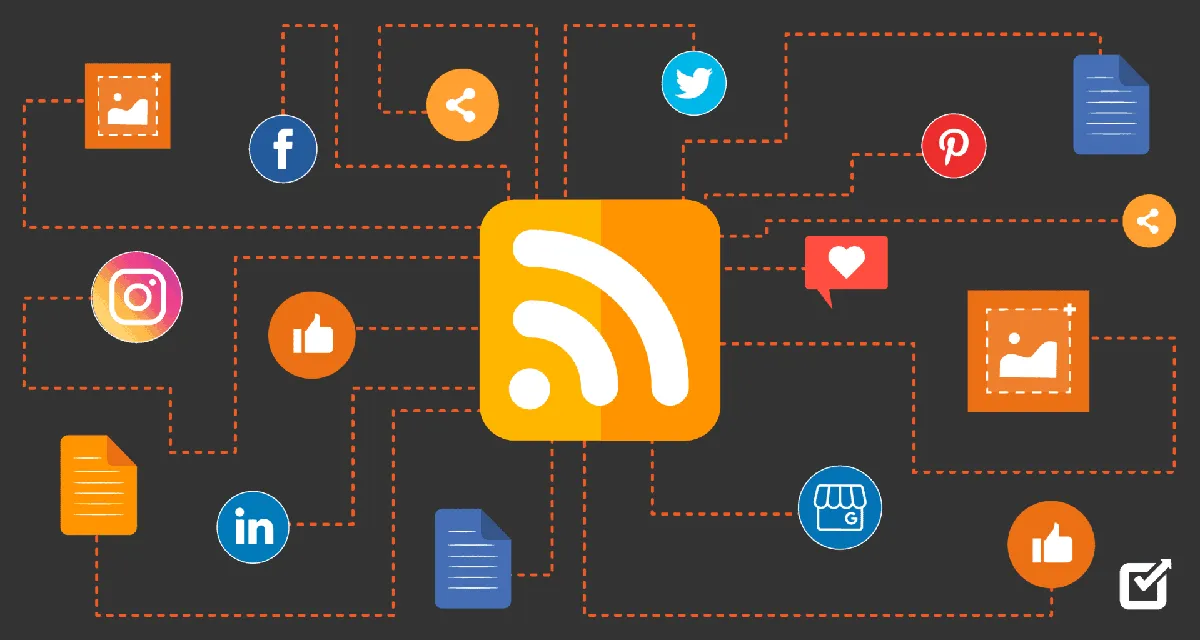
RSS doesn’t track you, predict you, or “optimize” anything. It lets you build your own information ecosystem, piece by piece, site by site.
It’s not nostalgic, it’s liberating.
What surprised me most was how… human it felt. You subscribe to writers, not algorithms. You follow subjects, not trends. You consume content because you’re curious, not because something decided it for you.
Obviously, I myself stumbling into the Indie Web — a constellation of personal sites, handmade pages, blogrolls, small directories, and digital diaries. It felt nothing like the sleek, corporatized platforms I grew up with. It felt personal. Specific. Unpackaged. (It felt so unusual that I decided to dedicate multiple collegiate projects to it.)
For someone who never experienced the early web, this was the closest thing to time travel.
Scholars like Evgeny Morozov have argued that the web wasn’t meant to be a passive consumption machine, and that reclaiming our digital spaces starts with rejecting the idea that algorithms know us better than we know ourselves (Morozov, 2013).
You can still find that sense of exploration — you just have to opt into it. The joy of searching isn’t about nostalgia. It’s about agency. It’s about curiosity. It’s about refusing to let someone else choose what you see.
I may not have grown up with the old web, but through RSS, blogrolls, and the Indie Web, I’m finally learning the pleasure of wandering online (cyber-surfing, if you will), not as a user being fed content, but as a person discovering it.
I'm still not completely sure how to work my RSS feed. It's a bit confusing, and tutorials for it are either 20 years old or made for people who already know how to program. But I'm trying. It feels like draw my own map from landmarks that I remember. It's not perfect, it probably be more efficient to go back to an pre-made algorithm, but at least I know where I'm going.
And honestly? Getting lost has never felt more intentional.
References
Bridle, J. (2018). New dark age: Technology and the end of the future. Verso Books.
McChesney, R. W. (2013). Digital disconnect: How capitalism is turning the internet against democracy. W. W. Norton & Company.
Morozov, E. (2013). To save everything, click here: The folly of technological solutionism. PublicAffairs.
Naughton, J. (2016). The evolution of the internet: From military experiment to general purpose technology. Journal of Cyber Policy, 1(1), 5–28.